

Food Allergy Care in NYC
“Best” depends on your needs, your allergy history, and the level of monitoring you want. This guide shows what to look for in a NYC food allergist, plus how NYFA approaches evaluation and desensitization support in our Manhattan office.

Jump to a section
What “best” should mean for food allergy care
Food allergies are not one-size-fits-all. The right allergist is the one whose process matches your needs: accurate evaluation, thoughtful risk assessment, clear communication, and a plan you can realistically follow.
- Safety-first evaluation: decisions are based on your history, symptoms, and appropriate testing.
- Clear next steps: you leave knowing what happens next, and why.
- Support over time: ongoing guidance matters, especially when fear of reactions shapes daily life.

Quick checklist: how to choose a NYC food allergist
Clinical credibility
- Board-certified allergist
- Experience with your specific allergy profile
- Comfort managing complex cases (multiple foods, prior reactions, anxiety)
Process and communication
- Explains results in plain language
- Gives a written plan and emergency guidance
- Sets realistic expectations without overselling outcomes
In-office monitoring options
- Ability to supervise higher-risk steps when appropriate
- Structured visits with consistent follow up
- Clear safety protocols
Real-world focus
- Works on quality of life and confidence
- Helps with dining out, travel, school, social events
- Addresses cross-contact concerns and label strategy
Testing and evaluation: getting to the “why” safely
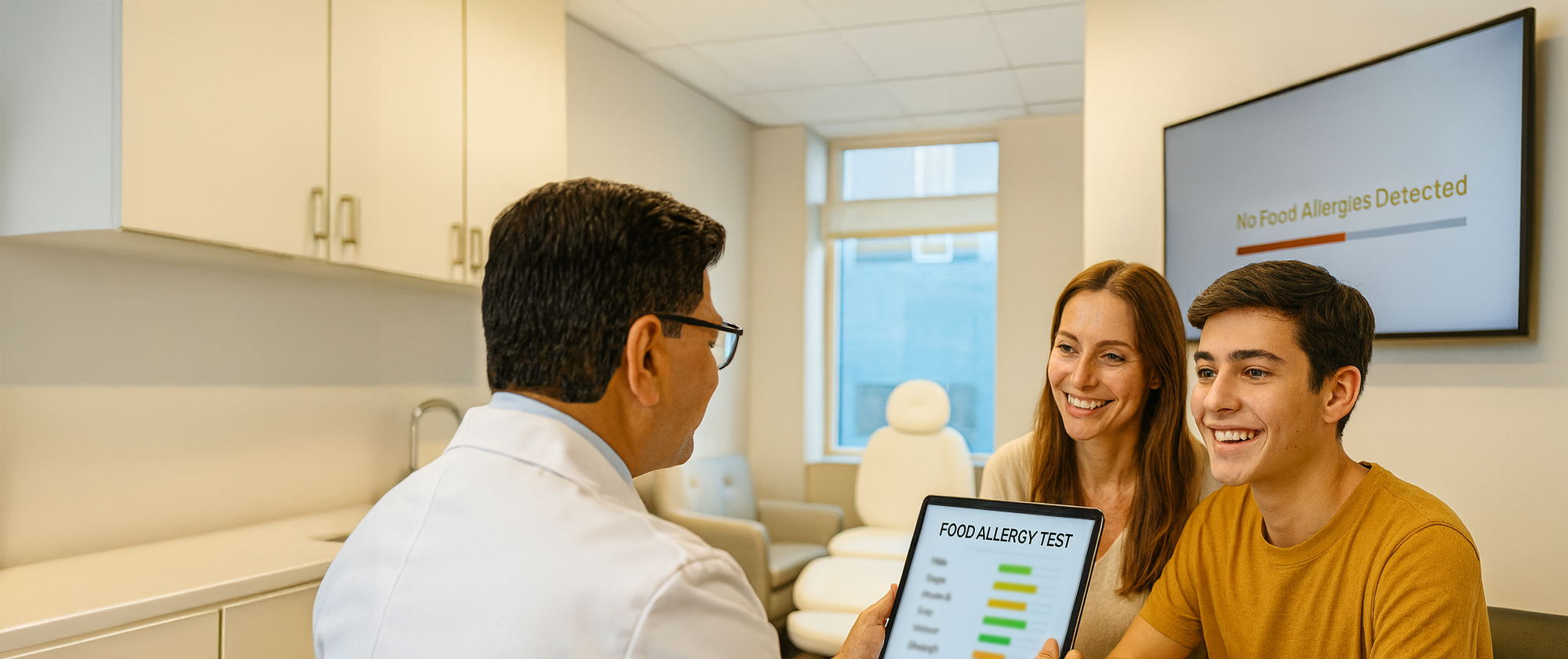
A strong evaluation usually combines your history with the right testing strategy, then confirms risk in a careful, stepwise way when needed.
Common testing tools (and what they help answer)
Testing should support clinical decision-making. It is not a scorecard. Your allergist interprets results alongside your symptoms and history to avoid overdiagnosis and false positives.
Treatment options: what “better” can look like
Different families want different goals. Some want clarity. Some want stronger protection against accidental exposure. Others want to work toward more freedom around specific foods under medical guidance.
Important
Desensitization is individualized and should be supervised by a qualified allergist. Outcomes and timelines vary, and no approach is right for every patient.
Questions to ask any food allergist
Bring this list to your first visit
- What is your approach to confirming diagnosis versus avoiding false positives?
- How do you decide if an in-office OFC is appropriate?
- If we consider desensitization, what does monitoring look like?
- How do you handle setbacks, reactions, or anxiety during the process?
- What lifestyle outcomes do you usually aim for, and what is realistic for my case?
A Patient Perspective: Michael's Story
Read the full review on Google“After decades of living with an egg allergy, working with Dr. Shah and the NYFA team helped me feel more confident and supported. Under medical guidance, I reached a point where I could finally enjoy foods I had avoided for years. The change in day-to-day stress was huge.”

Why patient stories help (and what they cannot promise)
Testimonials can explain what the experience felt like, but they cannot predict outcomes for someone else. If a claim sounds too certain, ask for the clinical process behind it: evaluation, monitoring, and safety protocols.
Common questions people ask when searching for a “best food allergist”
What is the most reliable test for food allergies?
There isn’t one single “most reliable” test for everyone. Diagnosis is usually based on your clinical history plus targeted testing. When appropriate, a medically supervised oral food challenge (OFC) is often used to confirm whether a food truly triggers symptoms, because it directly tests real-world tolerance under controlled conditions.
Can an allergist help with food allergies?
Yes. An allergist can help confirm diagnosis, reduce false positives, clarify risk level, prescribe emergency medications when appropriate (like epinephrine), provide an action plan, and discuss next steps such as supervised OFCs or desensitization options when they fit your case and goals.
How do you get a “full” food allergy test?
A “full” evaluation typically starts with your history (what happened, timing, how much was eaten, and what symptoms occurred), then uses targeted testing based on that history. Broad panel testing without symptoms can create confusing results, so many allergists prefer a focused approach and confirm uncertainty with supervised, stepwise evaluation when needed.
What 8 foods cause about 90% of food allergies?
The traditional “Big 8” are: milk, egg, fish, crustacean shellfish, tree nuts, peanuts, wheat, and soybeans. In the U.S., sesame is now also recognized as a major allergen, which is why you may see references to a “Big 9.”
About Dr. Atul Shah
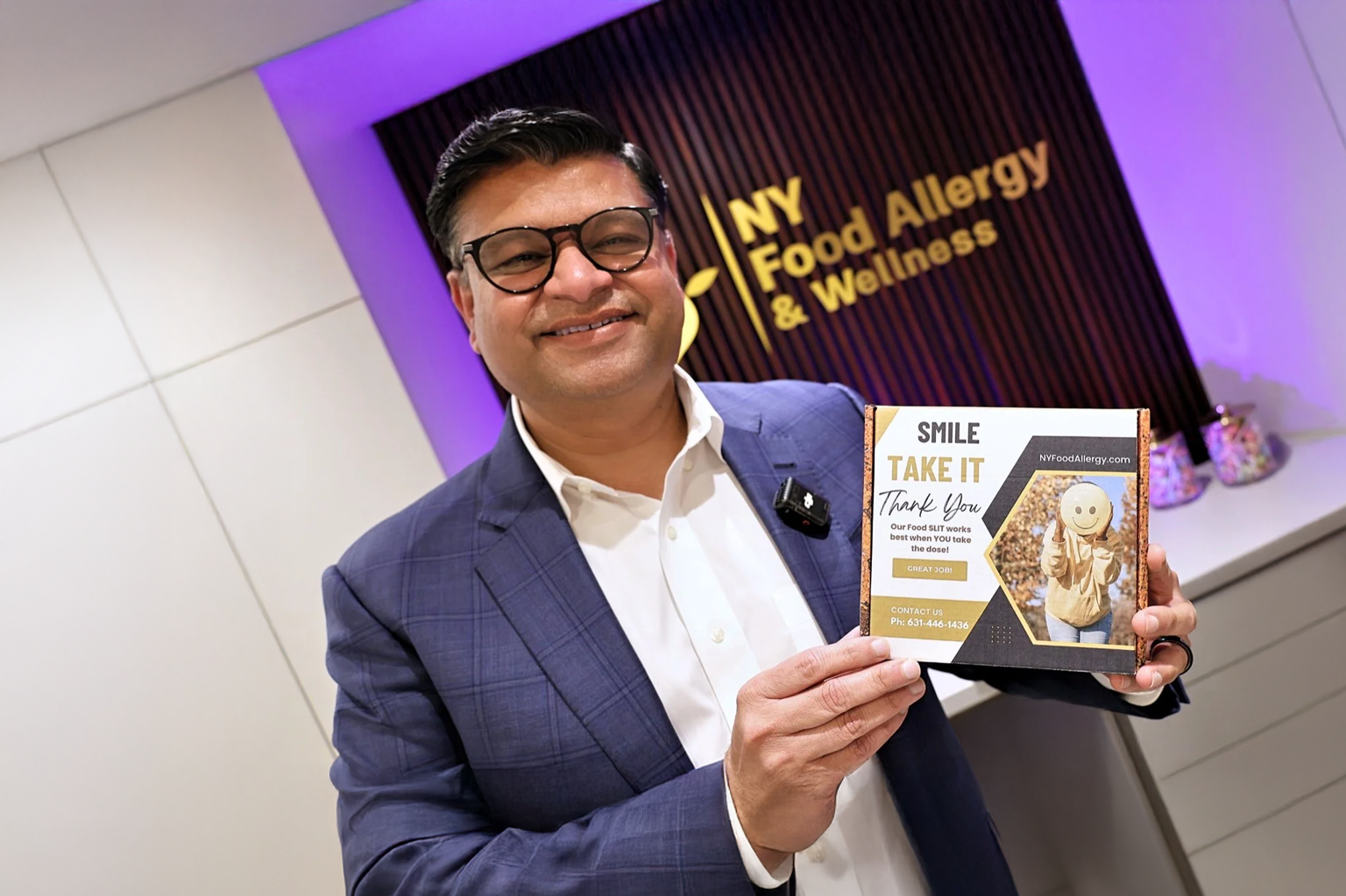
If “best” to you means experience, a structured process, and a safety-first approach, it is reasonable to look at a physician’s training, recognitions, and track record. Dr. Atul Shah is the founder of NYFA and is described on NYFA’s site as award-winning, with more than 20 years of experience and thousands of patient success stories across children, teens, and adults.
Recognitions (as listed on NYFA’s site)
- America’s Top Physicians Award
- Patients’ Choice Award
- Most Compassionate Physicians Award
- Recognized by the New Jersey Senate and General Assembly (joint legislative resolution)
Why it matters
- Credentials help, but process and safety protocols matter most
- Look for clear decision-making and realistic expectations
- Ask how testing is confirmed and how monitoring is handled
Related reading on NYFA
NYFA next steps in Manhattan
If you are exploring food allergy testing, OFCs, or desensitization support, NYFA provides evaluation and care in our Manhattan office. The fastest way to start is to request an appointment.
Visit NYFA’s Manhattan Office
NY Food Allergy & Wellness is located on the Upper East Side at 110 East 60th St., Suite 708, New York, NY 10022. Serving all of Manhattan, the NYC metro area, New Jersey, Connecticut, and patients nationwide, as well as international visitors.
