Food Allergy Care in New York City
Tree Nut AllergyTesting & Treatment
Clarity for What Comes Next.
Tree nut allergy is not one automatic diagnosis for every nut. Dr. Atul Shah evaluates the specific reaction history, which nuts are already eaten safely, cross-reactive pairs such as cashew and pistachio or walnut and pecan, targeted testing, and treatment goals to build a plan around the foods that actually matter.

Focused tree nut allergy evaluation, nut-by-nut diagnostic clarification, emergency planning, and individualized treatment with Dr. Atul Shah.
Understand Tree Nut Allergy
Tree Nuts Are a Group
of Allergens.Diagnosis
Is Still Nut by Nut.
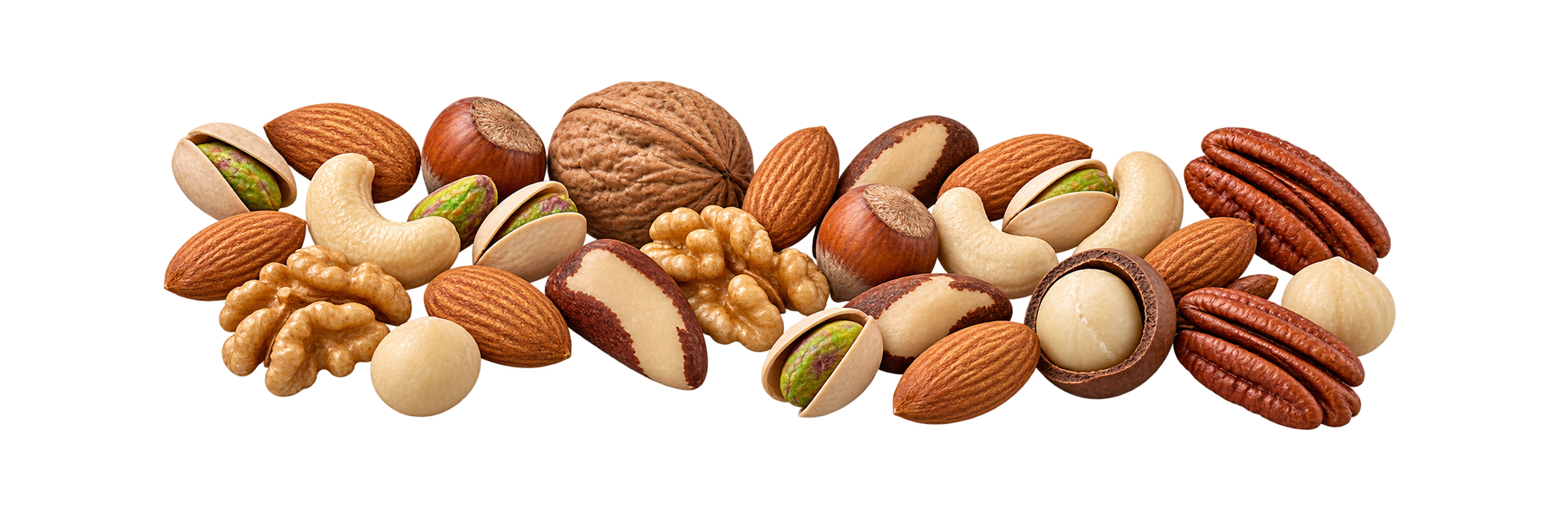
Tree nut allergy means an immune reaction to one or more specific tree nuts. It does not automatically mean a person is clinically allergic to every tree nut. Cashew and pistachio are closely related, as are walnut and pecan, but current tolerance, reaction history, testing, and cross-contact risk still matter when deciding which foods need to be avoided.
A positive skin or blood test shows sensitization, not necessarily a clinical food allergy. Dr. Shah starts with what actually happened and which nuts are already eaten safely, then may use targeted IgE testing, selected component testing, Basophil Activation Testing in selected cases, and a medically supervised oral food challenge when the answer could change the diet or treatment plan. It is always a good idea to start with allergists and the team that has the most expertise in food allergy so that you get the best outcomes. Dr. Shah and his team at NYFA are considered pioneers and global experts in food allergy.
Tree Nut Allergy Symptoms Can Change Quickly
Recognize a Tree Nut Reaction
Tree nut allergy symptoms often begin within minutes to a few hours after exposure. Reactions can be mild or severe, and the pattern may differ from one episode to the next. The absence of hives does not rule out a serious reaction. Symptoms vary from mild single-body-system reactions to more complex anaphylaxis and need to be recognized early and treated immediately.

Skin & Mouth
Hives, itching, flushing, lip or facial swelling, and an itchy or tingling mouth. Skin symptoms may appear alone or alongside symptoms in another body system.

Stomach
Abdominal pain, nausea, vomiting, cramping, or diarrhea after exposure. Gastrointestinal symptoms may occur as part of a broader allergic reaction.

Breathing
Cough, hoarse voice, wheezing, throat tightness, trouble swallowing, or shortness of breath. Breathing or throat symptoms can signal a serious reaction.

Circulation
Dizziness, faintness, confusion, pale or bluish color, or a drop in blood pressure. These symptoms may indicate a severe reaction requiring immediate action.
Tree Nut Allergy Testingfor the Right Nut and Question
Tree Nut Allergy Testing
Testing works best when it answers a specific question. Dr. Shah reviews the suspected nut, amount eaten, timing, symptoms, treatment, prior test results, pollen history, and which other nuts are currently eaten without symptoms before deciding what should be tested next.
Clinical Foundation
Reaction History & Current Nut Tolerance
The history separates a likely immediate tree nut allergy from a broad testing result. It also identifies tolerated nuts that may not need to be removed and clarifies whether peanut, coconut, seeds, or a mixed food were actually involved.
Targeted Testing
Skin Prick, Specific IgE & Selected Components

Skin testing and nut-specific IgE can identify sensitization. When it changes interpretation, selected components such as Ana o 3 for cashew, Jug r 1 for walnut, and Cor a 9 or Cor a 14 for hazelnut may add context about primary nut sensitization versus patterns such as pollen-food syndrome. Component results are not stand-alone diagnoses.
Advanced Functional Testing
Basophil Activation Testing at NYFA

BAT measures how a patient's basophils respond to a selected allergen in the laboratory. In carefully chosen cases, it can add functional evidence when history, skin testing, specific IgE, or component results do not fully align. It is one part of the diagnostic picture, not a universal replacement for other testing.
Direct Confirmation
Medically Supervised Oral Food Challenge

A supervised oral food challenge can confirm or rule out allergy to a specific nut when the history and testing leave meaningful uncertainty. It can also help determine whether a nut avoided because of testing alone can be returned to the diet. Challenges belong in an appropriately equipped medical setting, not at home.
Board-Certified Food Allergist
Meet Dr. Atul Shah.
Dr. Shah is a board-certified allergist and a fellow of both the AAAAI and ACAAI. He stays directly involved from diagnostic clarification through treatment and follow-up.

Inside an NYFA Consultation
History, current tolerance, earlier results, and the patient's real decision guide the visit.
Patient Success Stories
NYFA Experience
A Private Practice Built Around Compassion.
NY Food Allergy & Wellness combines careful diagnostic evaluation, supervised food challenges, and individualized treatment planning with ongoing physician involvement.
Expert Care
Focused on food allergy care
Treated at NYFA
Awards & Recognition
- America's Top Physicians Award
- Patients' Choice Award
- Most Compassionate Physicians' Award

Tree Nut Allergy Treatment
Protection First. Then Consider Nut-Specific Options.
There is no single treatment plan for every tree nut allergy. Confirmed allergens still need a safety plan that includes avoidance, label reading, ready access to prescribed epinephrine, and clear instructions for accidental exposure. For selected patients, Dr. Shah may also discuss immunotherapy or biologic therapy based on the specific nuts involved, medical history, risk, and treatment goals. For many, a desire to live a life of freedom without reading labels or free-eating is a goal, and we help these families reach their goals of food allergy freedom in the most efficient way.

SLIT at NYFA
Sublingual Immunotherapy
SLIT uses a medically directed allergen dose under the tongue. Tree-nut-specific SLIT requires proper diagnosis and strategic selection of nuts to maximize the benefits and prevent the need for OIT in select tree nut allergic individuals. When used properly, tree nut SLIT can be a very effective option for many patients. Dr. Shah may discuss it for selected patients when it fits the diagnosis, goals, daily routine, and broader treatment plan.
- Individualized allergen and dosing plan
- Ongoing medical follow-up
- Evidence and candidacy vary by nut
OIT at NYFA
Oral Immunotherapy
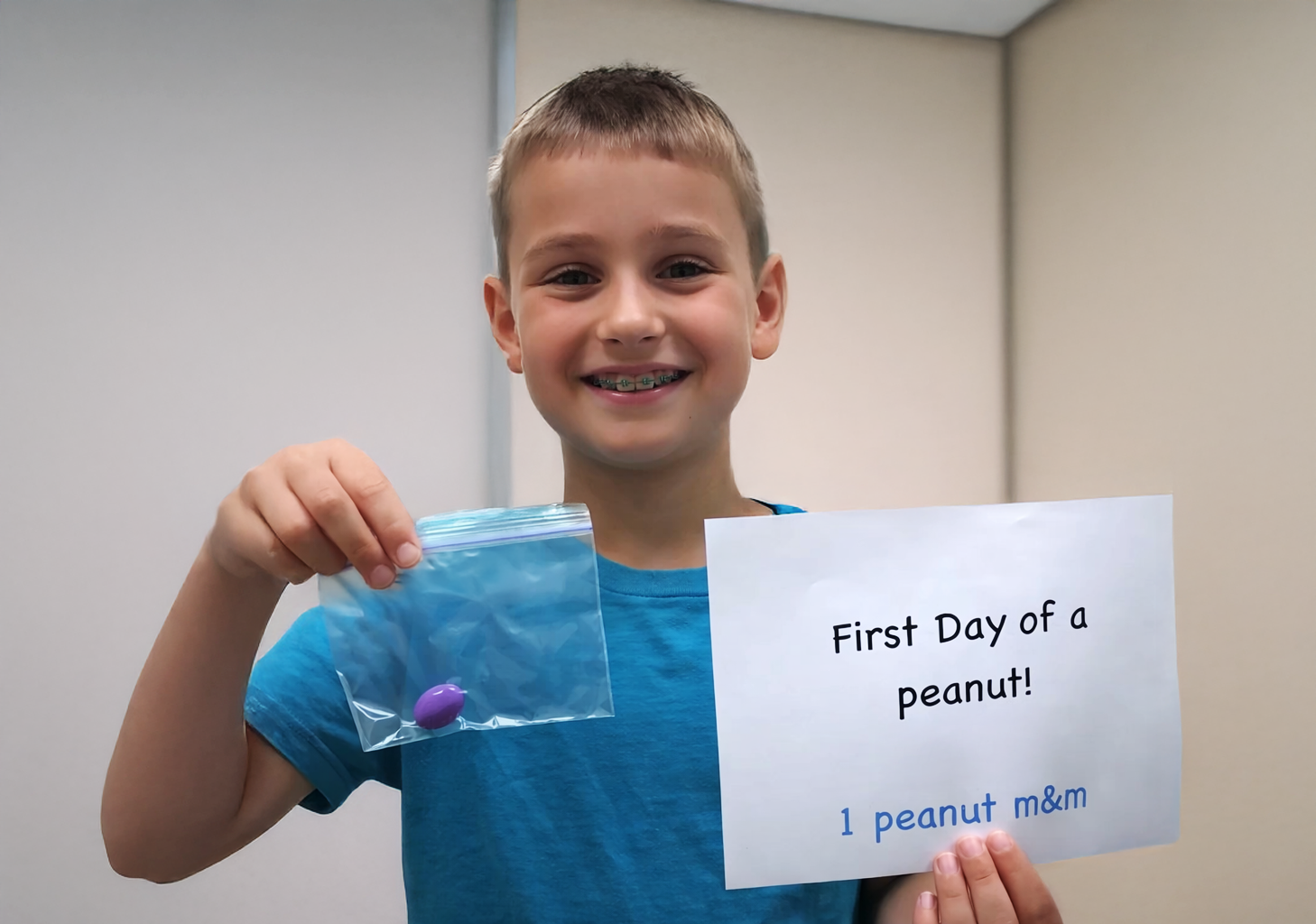
Tree nut OIT uses gradually increasing, medically directed amounts of a confirmed allergen with the goal of raising the reaction threshold. It is highly effective to help tree nut allergic individuals reach their goals of cross-contamination safety and free eating. It must be personalized to be safe and efficient. Dr. Shah and the NYFA team specialize in multi-food OIT under the FATE Program, and multiple tree nuts can be combined with peanuts, sesame, or other foods to maximize the benefits of desensitization protocols. Treatment of cashew can help pistachio allergy, and treatment with walnut can clear pecan allergy in most patients. The design and selection of a personalized treatment plan helps save time and achieve objectives with less effort.
- Daily dosing and regular follow-up
- Allergic and gastrointestinal reactions are possible but easily minimized by personalized protocols and proper guidance, which is our strength.
- Treatment does not erase the need for precautions
Biologic Therapy for Food Allergy
Omalizumab is FDA-approved for certain patients age 1 year and older with IgE-mediated food allergy to reduce allergic reactions that may occur after accidental exposure to one or more foods. It does not replace avoidance, is not an emergency treatment, and may be considered alone or alongside other parts of an individualized plan when medically appropriate. The majority of our patients choose not to be on biologics while traveling with us on a journey to food allergy freedom.
- Confirmed food allergens still need to be avoided when biologics are used as the only therapy
- Epinephrine remains first-line emergency treatment for anaphylaxis
- Candidacy and combination therapy require individualized review
The Patient Experience
What Patients Value About Their Care
Public patient reviews describe careful evaluation, clear explanations, responsive support, and a care plan that feels individualized rather than automatic.
Selected public patient reviews are summarized for length and clarity. Follow each source link for the reviewer's original wording. Individual experiences vary.
Read More Patient StoriesA patient who sought care after an emergency-room visit for food allergy described Dr. Shah as kind, caring, and thorough, and said she left the visit satisfied with the plan for addressing her concerns.
Patient Stories on Video
Hear From the NYFA Community
A Focused First Visit
What to Expect at aTree Nut Allergy Consultation
The first visit is built around the nuts and decisions that actually need clarification, not a preset panel that assumes every tree nut is the same.
Reconstruct Each Reaction History
Bring the details about a specific nut or food, amount, timing, symptoms, treatment, and any photos or emergency records that help clarify what happened.
Map the Current Nut Diet
Which nuts are already eaten safely matters. Cashew, pistachio, walnut, pecan, hazelnut, almond, peanut, coconut, seeds, mixed foods, and restaurant exposures may each answer a different clinical question.
Choose the Clearest Next Step
The next step may be education, targeted testing, a supervised oral food challenge, a treatment discussion, or no additional procedure at all for a nut that is already clearly tolerated.
Tree Nut Allergy Care in New York City
Visit NYFA's Upper East Side Office
NY Food Allergy & Wellness provides focused tree nut allergy evaluation, nut-specific testing, supervised oral food challenges, and individualized treatment planning from its Manhattan office near Park Avenue, Lexington Avenue, and East 60th Street.
NY Food Allergy & Wellness
Manhattan Food Allergy Office
110 East 60th Street, Suite 708New York, NY 10022
In-person food allergy care for infants, children, teens, and adults from New York City, nearby states, and families traveling for specialized evaluation.
Office Hours
- Tuesday
- 9:00 AM to 5:00 PM
- Wednesday
- 9:00 AM to 5:00 PM
- Thursday
- 9:00 AM to 7:00 PM
- Friday
- 9:00 AM to 5:00 PM
- Saturday
- 9:00 AM to 2:00 PM
- Sunday and Monday
- Closed
Tree Nut Allergy, Cross-Reactivity & Which Nuts Count
The questions that change everyday life are often not “Am I allergic to nuts?” but which specific nuts are involved, which relationships matter, and which foods should stay in the diet.
Cashew & Pistachio
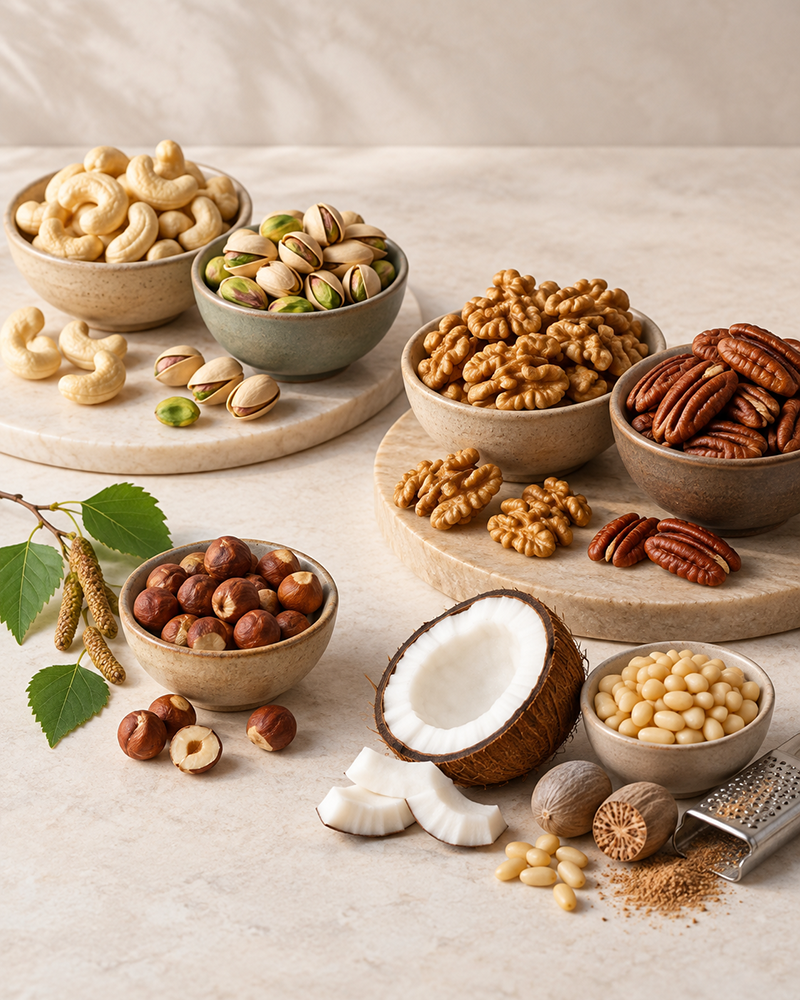
Cashew and pistachio are closely related and show a high degree of clinical cross-reactivity. That relationship is important for diagnosis and treatment planning, but the patient's actual history and tolerance still determine whether both foods are clinically relevant.
Walnut & Pecan
Walnut and pecan are another closely related pair. Co-sensitization and co-allergy are common, and walnut OIT may provide cross-desensitization to pecan in many treated patients, but that relationship should not be generalized to every other tree nut.
Hazelnut & Pollen-Food Syndrome
Hazelnut testing can reflect a primary hazelnut allergy or birch-pollen-related cross-reactivity. Reaction pattern and selected components can help distinguish a heat-stable storage-protein pattern from mouth-focused pollen-food syndrome when that distinction affects the plan.
Coconut, Pine Nut & Nutmeg
These names create confusion. Under FDA guidance updated in 2025, coconut is no longer on the major-allergen Tree Nut List. Pine nut or pinon nut is on the current FDA Tree Nut List for labeling. Nutmeg is a spice seed, not a tree nut. Any of these foods can still cause its own allergy, so the individual history matters.
What Can Be Mistakenfor Tree Nut Allergy?
When the Story Does Not Quite Fit
Tree nut testing is especially vulnerable to over-broad interpretation because sensitization and cross-reactivity are common. The goal is to identify the specific food that causes symptoms without turning every positive test, every “nut” name, or every related food into an unnecessary restriction.
Pollen-Food Syndrome
Some pollen-sensitized patients experience itching or tingling mainly in the mouth after foods such as hazelnut. That pattern can differ from a primary storage-protein allergy associated with systemic reactions, so the history and selected component results may matter. Basophil Activation Testing offered at NYFA can be very helpful in proper diagnosis.
Sensitization Without Clinical Allergy
A positive skin or blood result can occur even when a nut has never caused symptoms or is already eaten safely. Testing shows sensitization. The diagnosis still depends on the clinical history and, when needed, further evaluation or a supervised food challenge. Basophil Activation Testing offered at NYFA can be very helpful in proper diagnosis.
FPIES (Food Protein Induced Enterocolitis Syndrome)
Delayed and profuse vomiting or diarrhea after tree nut exposure is usually FPIES and not from IgE nut allergy.
Peanut Is Not a Tree Nut
Peanut is a legume. Some people have both peanut and tree nut allergy, but one diagnosis does not automatically prove the other. Peanut should be evaluated from its own reaction history and testing rather than grouped with tree nuts by name alone.
Mixed Foods & Cross-Contact
Bakery items, desserts, pesto, candy, ice cream, trail mix, nut butters, sauces, and restaurant dishes may contain several nuts or share equipment. Reconstructing the actual exposure can prevent the wrong nut from being blamed.
A Patient Success Story
Kara's journey reflects what individualized care can make possible.
Kara shares her experience with food allergy care at NYFA and the confidence her family gained through a plan shaped around her needs. Individual experiences vary.
Watch more patient storiesA Plan Built to Be Lived
From Specific Nutsto Everyday Eating
Tree nut care should connect the diagnosis with labels, bakeries, restaurants, travel, school, work, nut milks and butters, shared equipment, emergency planning, and the patient's treatment goals without removing foods that are already clearly tolerated.
The FATE™ Program
Care shaped around the patient.
The Food Allergy Tolerance Enhancement Program brings diagnostic clarification, supervised food challenges, treatment when appropriate, and ongoing follow-up into one individualized pathway with Dr. Shah.
Clarify the Nut List
History comes first. Targeted IgE, selected components, BAT, or a supervised oral food challenge may be considered when a result could remove uncertainty about a specific nut.
Keep Tolerated Nuts in View
Nuts already eaten without symptoms are meaningful clinical evidence. The plan should distinguish confirmed allergy from sensitization or uncertainty so foods are not removed from the diet without a clear reason.
Consider Treatment Fit
For selected patients, Dr. Shah may discuss OIT, SLIT, or biologic therapy in the context of the confirmed allergens, medical history, risk, daily routines, and goals.
Support the Plan Over Time
Follow-up considers dosing, precautions, response to treatment, emergency preparedness, and whether the avoidance list can be refined as evidence changes.
Living With Tree Nut Allergy
Safety without an unnecessarily broad diet.
A useful tree nut plan names the confirmed allergens, accounts for cross-contact risk, protects against accidental exposure, and distinguishes foods that sound like nuts from foods that are clinically relevant to the individual patient.
Labels & the 2025 FDA Tree Nut List
U.S. major-allergen labeling requires the specific tree nut source for nuts on FDA's current Tree Nut List. Coconut and chestnut are no longer on that major-allergen list, though they still appear by common name in the ingredient list when used as ingredients unless an exemption applies.
Restaurants, Bakeries & Shared Equipment
Ask which nuts are used, whether shared grinders, fryers, scoops, bakery equipment, pesto stations, ice-cream tools, or dessert surfaces create relevant cross-contact, and whether the restaurant can manage the specific allergy.
Nut Milks, Oils & Personal-Care Products
Almond, cashew, hazelnut, macadamia, walnut, and other nut-derived ingredients can appear outside whole nuts. Refined versus unrefined oils and topical products require ingredient-specific judgment rather than a blanket rule for every person with tree nut allergy.
Care Across Life Stages
Tree Nut Allergy Care forInfants, Children, Teens and Adults
The clinical question may be similar, but the daily realities are not. A useful plan must fit the patient's age, routine, responsibilities, current diet, and readiness for testing or treatment.

Infants and Children
Clarify early reactions, avoid turning screening tests into an all-nut restriction, support caregivers and schools, and decide whether a specific nut needs challenge, continued avoidance, or treatment.

Teens and Young Adults
Build independence around labels, restaurants, travel, carrying epinephrine, communicating the specific nut allergy, and keeping tolerated foods in the diet when appropriate.

Adults
Evaluate new adult-onset reactions, revisit an old childhood diagnosis, separate pollen-food syndrome from primary allergy, interpret broad positive panels, or explore treatment after years of avoidance. Many adults have been told to “live with allergies”, and we disagree! A lot can be done to help food-allergic adults achieve food-allergy freedom. Our NYFA team has the expertise to do just that for you.
Tree Nut Allergy FAQs
Questions Patients AskBefore the Visit
These answers provide general context. Diagnosis and treatment decisions require an individual medical evaluation.
View All FAQsWhat is a tree nut allergy?
Tree nut allergy is an IgE-mediated immune reaction to proteins in one or more specific tree nuts. It can cause symptoms ranging from hives or mouth symptoms to vomiting, breathing problems, dizziness, or anaphylaxis. A positive allergy test without a compatible history does not by itself prove clinical allergy.
Which foods count as tree nuts for U.S. allergy labeling?
FDA guidance updated in 2025 lists almond, black walnut, Brazil nut, California walnut, cashew, hazelnut or filbert, heartnut or Japanese walnut, macadamia or bush nut, pecan, pine nut or pinon nut, pistachio, and English or Persian walnut on its major-allergen Tree Nut List. The list is a labeling framework, not a substitute for an individual's clinical diagnosis.
If I am allergic to one tree nut, do I have to avoid all tree nuts?
Not automatically. Allergy to one tree nut does not prove allergy to every other tree nut. The decision to eat or avoid other nuts should consider reaction history, current tolerance, targeted testing, cross-reactivity, age, quality of life, and realistic cross-contact risk.
Is coconut a tree nut allergy concern?
Coconut is not botanically a tree nut, and FDA removed coconut from its major-allergen Tree Nut List in 2025. A person can still have a separate coconut allergy, but a tree nut allergy does not automatically mean coconut must be avoided.
Are pine nuts tree nuts?
Pine nuts are botanically seeds, but pine nut or pinon nut is included on FDA's current Tree Nut List for U.S. major-allergen labeling. Whether an individual patient is allergic to pine nut still depends on the reaction history and appropriate evaluation.
Is nutmeg a tree nut?
No. Nutmeg is a spice made from a seed and is not a tree nut. A person can have an individual nutmeg allergy, but tree nut allergy does not automatically make nutmeg unsafe.
Is peanut a tree nut?
No. Peanut is a legume. Some people have both peanut and tree nut allergies, but one diagnosis does not automatically prove the other. Peanut and each tree nut should be interpreted from their own history and testing.
Why are cashew and pistachio, or walnut and pecan, often discussed together?
These pairs are botanically and allergenically related, and clinical cross-reactivity is common. That relationship can influence testing and treatment planning, but it should not be expanded to every other tree nut without evidence.
What are the symptoms of a tree nut allergy?
Symptoms can include hives, itching, facial or lip swelling, mouth or throat symptoms, abdominal pain, nausea, vomiting, coughing, wheezing, trouble breathing, dizziness, or anaphylaxis. Symptoms often begin within minutes to a few hours after exposure.
How is tree nut allergy diagnosed?
Diagnosis starts with the reaction history and current diet. Depending on the question, an allergist may use skin prick testing, nut-specific IgE, selected component testing, Basophil Activation Testing in selected cases, or a medically supervised oral food challenge.
What do Ana o 3, Jug r 1, Cor a 9 and Cor a 14 mean?
These are allergen components used in selected clinical situations. Ana o 3 is associated with cashew, Jug r 1 with walnut, and Cor a 9 and Cor a 14 with hazelnut. They can add context about sensitization patterns, but no component result should be interpreted as a stand-alone diagnosis or a guarantee of reaction severity.
Can tree nut allergy develop later in life or be outgrown?
Tree nut allergy can first appear later in life, and some patients may lose a previously diagnosed allergy over time. Because tree nut allergy often persists, possible resolution should be evaluated with updated history and testing and, when appropriate, a supervised oral food challenge rather than a home trial.
What treatments are available for tree nut allergy?
Avoidance of confirmed allergens, prescribed epinephrine, and an emergency plan remain foundational. For selected patients, an allergist may discuss oral immunotherapy, other forms of immunotherapy, or omalizumab. Evidence, candidacy, dosing, goals, and cross-desensitization differ by nut and by patient. We believe that every tree-nut-allergic patient deserves food allergy freedom and their treatment plan must be personalized to meet their food safety or food freedom goals.
Explore Food Allergy Care by Allergen.
Choose a food to see the testing and treatment questions NYFA evaluates. View the complete allergen index