Understanding Food Allergies, Intolerances, and Sensitivities
Food Allergy Education
Understanding Food Allergies, Intolerances, and Sensitivities
Food allergies, intolerances, and sensitivities can look similar on the surface, but they are not the same. Use this guide to understand the differences, common symptoms, testing options, and practical steps to reduce risk.
Jump to a section
Understanding allergies, intolerances, and sensitivities
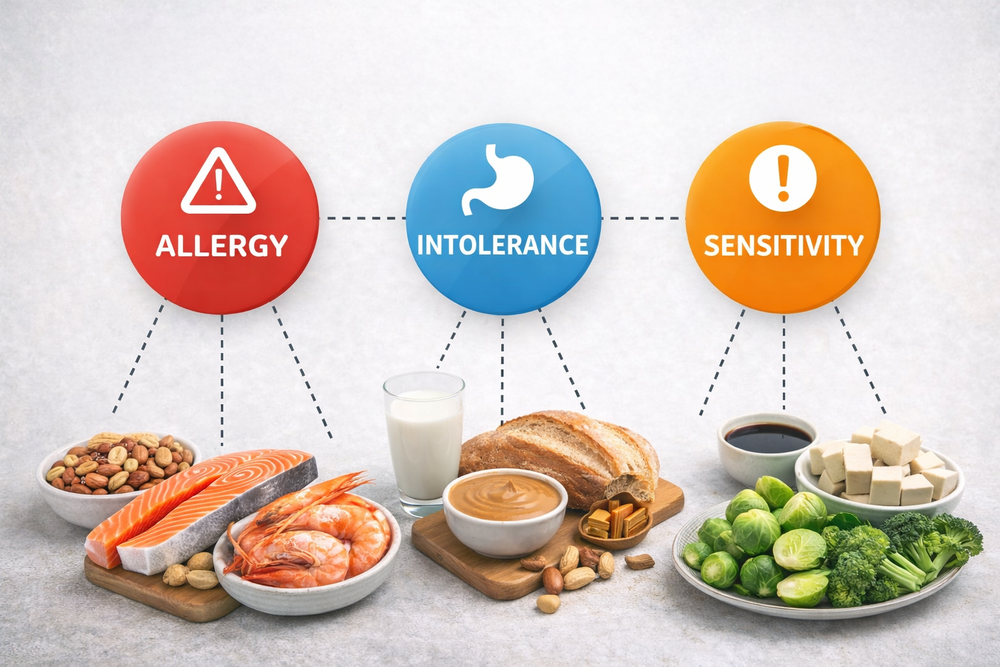
These terms get used interchangeably, but they describe different reactions in the body:
- Food allergy: an immune response that can become severe and may be life-threatening.
- Food intolerance: a digestive or metabolic issue (not an immune allergy), often dose-dependent.
- Food sensitivity: a broad category for reactions that do not fit classic IgE allergy patterns and can be harder to pin down.
Getting the category right helps you avoid unnecessary restrictions while still protecting safety.
A true food allergy can require emergency preparedness and strict avoidance, while an intolerance may be managed with portion changes, timing, or targeted strategies. Sensitivities often benefit from a structured approach, such as a guided elimination and reintroduction plan, rather than broad, permanent restriction.
Positive tests alone do not always equal a real-world risk. Symptoms that appear hours later, vague fatigue, and intermittent digestive issues can have multiple causes. That is why the best next step is usually a structured workup that connects history, symptoms, and the right testing tools.
This article is for education and does not replace medical advice. If you have severe symptoms or signs of anaphylaxis, seek urgent medical care.

The science behind food allergies
Many classic food allergies involve an immune response where the body misidentifies a food protein as harmful. In IgE-mediated allergy, exposure can trigger IgE antibodies to signal immune cells to release chemicals (including histamine). That can lead to symptoms ranging from hives and swelling to more serious reactions.
Food allergens are often proteins that can remain stable through digestion and cooking. The immune system can recognize parts of those proteins and respond in a way that creates inflammation or widespread symptoms. This is one reason the same food can cause reactions in one person and not another.
Genetics can influence risk, especially in families with allergic disease such as eczema, asthma, or allergic rhinitis. Environmental factors and timing of exposures can also play a role. Because risk is individualized, the best path forward is usually a personalized plan based on history and appropriate testing.
Common food allergens and their effects
Common food allergens often include milk, egg, peanut, tree nuts, wheat, soy, fish, shellfish, and sesame. Reactions vary by person, exposure amount, and overall risk profile, which is why individualized guidance is important.
If you are unsure whether your symptoms represent allergy risk or something else, a structured evaluation can help reduce uncertainty.
Milk and egg allergy are commonly seen in childhood. Symptoms can include hives, swelling, vomiting, respiratory symptoms, and in some cases more severe reactions. Some people outgrow these allergies, while others continue to react into adulthood.
Peanut and tree nut allergy can be more persistent and may carry a higher risk of severe reactions for certain individuals. Real-world risk depends on the person’s history, testing, and sensitivity level, not the label alone.
Learn more: Peanut Allergy and Tree Nut Allergy.
Fish and shellfish allergies are more commonly recognized later in life. Cross-contact in restaurants can be an important risk factor, and preparedness plans should be personalized for each individual.
Allergy vs intolerance vs sensitivity: key differences
A food allergy involves the immune system and can cause symptoms that escalate quickly. Some reactions are mild, but others can be severe. Because of that range, risk assessment should be based on symptom history plus appropriate testing, not guesses.
Food intolerances do not follow the same immune allergy pathway. They are often related to digestion or metabolism and can be dose-dependent. Lactose intolerance is a classic example, where the body has difficulty breaking down lactose, leading to symptoms like bloating, gas, and diarrhea.
Food sensitivity is a broad term that can include delayed or non-specific symptoms. Because the category is wide, the best approach is usually structured: track patterns, remove suspected triggers for a defined period, and reintroduce methodically, ideally with guidance.
Symptoms: what to look for

Food allergy symptoms can include itching, hives, swelling of the lips or face, coughing, wheezing, throat tightness, nausea, vomiting, diarrhea, and lightheadedness. Timing matters. Symptoms that occur quickly after exposure raise concern for allergy risk and should be evaluated.
Anaphylaxis is a severe allergic reaction that can involve breathing difficulty, widespread hives or swelling, fainting, or a significant drop in blood pressure. Anyone at risk should have an emergency plan and discuss epinephrine use with a qualified clinician.
Intolerance symptoms tend to be more digestive and may appear later, such as bloating, gas, abdominal pain, and diarrhea. Sensitivities can include digestive symptoms plus non-specific symptoms like fatigue or headaches, which can have multiple causes.
Diagnosis and testing: what actually helps
A detailed history matters: what you ate, how fast symptoms began, how long they lasted, and whether the reaction has repeated. Many “positive tests” can be misleading without symptom context.
Common allergy tools include skin testing, specific IgE blood testing, and component testing. These tools can help estimate risk, but they are not perfect predictors on their own. A clinician’s interpretation is critical.
When appropriate, an oral food challenge performed under medical supervision can clarify real-world tolerance. For suspected sensitivity patterns, a structured elimination and reintroduction plan can help identify triggers while reducing unnecessary restriction.
Certain intolerances have specific testing pathways, such as breath testing for lactose malabsorption in some settings. A clinician can help decide whether testing is appropriate versus dietary strategy.
Managing food allergies: tips and strategies
Start with clarity on what truly needs to be avoided. Read labels carefully and learn alternate names for ingredients. If your label list keeps growing without clear symptoms, that can be a sign you need a more targeted evaluation.
Cross-contact can happen when foods share prep surfaces, utensils, or oils. At home, separate equipment can reduce risk. When dining out, ask direct questions about preparation and communicate your needs clearly.
If you are at risk for severe reactions, discuss emergency planning with a clinician. Many people are advised to carry epinephrine and know when to use it. Medical ID jewelry can also help in emergencies.
Clear plans help with school, travel, and social events. That includes where medication is stored, who is trained to help, and how to reduce risk without feeling isolated or restricted.
Diet and food sensitivities: practical approach
If symptoms are vague or delayed, the most useful strategy is often a time-limited elimination plan that removes a small set of likely triggers for a defined window, then tracks symptom changes. Overly broad restriction can backfire by reducing nutrition quality and increasing anxiety.
Reintroduce foods one at a time in a consistent way while tracking symptoms. This helps determine whether a food is truly a trigger and whether dose matters. Working with a clinician or dietitian can make this process safer and more accurate.
Some people explore probiotics or supplements to support gut health. Evidence varies by symptom type and individual factors, so it is smart to discuss any supplement plan with a qualified clinician, especially if you have allergies or complex medical history.
Helpful resources
Reliable education sources include major allergy organizations and academic medical centers. When researching online, prioritize content written or reviewed by allergy specialists and avoid claims that promise guaranteed outcomes.
Allergy-focused restaurant tools and label-scanning apps can help reduce guesswork, especially while traveling. Use them as support, but always confirm directly with manufacturers and restaurant staff when needed.
NYFA resources to explore next:
Conclusion: next steps
Food allergy, intolerance, and sensitivity can share overlapping symptoms, but they require different strategies. The most reliable path is to connect your symptom history with the right evaluation tools so you can avoid unnecessary restrictions while staying safe.

Diagnosis and testing for allergies
Diagnosing food allergy involves a combination of history, exam, and targeted testing. A careful history can reveal timing patterns and help determine what testing is useful versus misleading.
Allergy testing may include skin testing, specific IgE blood tests, and component testing. Results must be interpreted in context because tests can be positive even when a person is not clinically reactive.
In select situations, an oral food challenge under medical supervision can clarify tolerance and real-world risk. Challenges should only be performed by experienced providers in an appropriate setting.
Basophil Activation Test (BAT)
At NYFA, advanced diagnostics may include the Basophil Activation Test (BAT) alongside sIgE blood testing, component testing, and (when appropriate) oral food challenges. BAT is designed to evaluate how basophils, a type of immune cell involved in allergic responses, react when exposed to a suspected allergen in a controlled lab setting.
Many of our new patients come with “food allergy” labels due to positive blood tests or skin tests done elsewhere without proof of any prior exposure or reactions. We aim to decode false diagnoses from true food allergies through sIgE tests, component tests, BAT, and oral food challenges.
The power of desensitization therapy with NYFA
For over two decades, Dr. Atul Shah has helped patients pursue desensitization strategies through a structured approach. NYFA’s FATE™ Program is designed to support tolerance goals while prioritizing safety, monitoring, and personalized adjustments.
How the FATE™ Program works
- Personalized assessment: review of history, severity, and goals.
- Customized pathway: step-by-step exposure strategy under medical guidance.
- Ongoing monitoring: adjustments based on response and safety signals.
- Real-life preparedness: practical coaching for dining out, school, travel, and cross-contact awareness.
Results vary by patient. The goal is improved tolerance and confidence, not guaranteed outcomes.
The role of NYFA
NYFA focuses on clarity, not assumptions. Many patients arrive with “food allergy” labels based on testing alone, without a clear reaction history. Our approach connects symptom context with the right tools to better understand true risk.
Once risk is clarified, NYFA guides next steps that fit your life, whether that means a refined avoidance plan, emergency preparedness, supervised challenges when appropriate, or a structured desensitization pathway.
NYFA next steps in Manhattan
Visit NYFA’s Manhattan Office
NYFA is located on the Upper East Side at 110 East 60th St., Suite 708, New York, NY 10022. Serving all of Manhattan, the NYC metro area, New Jersey, Connecticut, and patients nationwide, as well as international visitors.
FAQs
Constipation is more commonly linked to diet pattern changes, dehydration, medication side effects, IBS, or other digestive issues than to classic IgE-mediated food allergy. That said, certain non-IgE food reactions and inflammatory gut conditions can sometimes present with constipation, especially when symptoms are chronic and paired with abdominal pain, bloating, or appetite changes.
If constipation repeatedly follows a specific food along with other consistent symptoms, a structured evaluation can help separate true allergy risk from intolerance, sensitivity patterns, or unrelated GI causes.
Stomach ulcers are most often caused by H. pylori infection or use of NSAIDs (like ibuprofen or naproxen). Food allergy is not a typical cause of ulcers. Some allergic or inflammatory GI conditions can cause pain or irritation, but they are different from true peptic ulcer disease.
If symptoms suggest an ulcer (burning pain, black stools, vomiting blood, unexplained weight loss), that warrants prompt medical evaluation.
A food allergy involves the immune system and can include rapid symptoms such as hives, swelling, breathing symptoms, vomiting, or anaphylaxis in some cases. A food intolerance is usually digestive or metabolic and is often dose-dependent, like lactose intolerance. A food sensitivity is a broad label for reactions that are not classic IgE allergy and can be delayed or harder to identify, often benefiting from a structured elimination and reintroduction approach.
Chest tightness can occur during allergic reactions, especially if the reaction affects breathing (wheezing, throat tightness, coughing). However, chest pain has many possible causes, including reflux, esophageal spasm, anxiety, and cardiac conditions.
If chest pain is severe, new, or accompanied by shortness of breath, fainting, or sweating, it should be treated as urgent.
With many intolerances, ongoing exposure mainly leads to recurring symptoms such as bloating, cramps, diarrhea, or discomfort and can impact quality of life. Some intolerances can contribute to nutrient issues if they cause avoidance or chronic GI symptoms.
A personalized plan often focuses on identifying dose thresholds, timing, and substitutions rather than broad restriction, depending on the intolerance type.
Chest pain after eating is commonly linked to reflux or esophageal irritation. Common triggers can include spicy foods, high-fat meals, acidic foods (like tomato or citrus), chocolate, caffeine, peppermint, carbonated beverages, and large portions eaten quickly. In some people, alcohol can also worsen symptoms.
If chest symptoms reliably follow a specific food along with allergy-type symptoms (hives, swelling, wheeze, throat tightness), that should be evaluated for allergy risk rather than assumed to be reflux.
About Dr. Atul Shah
- Founder of NYFA
- Creator of the FATE™ Program
- 20+ Years of Experience
- 15,000+ Success Stories
- America’s Top Physicians’ Award
- The Patients’ Choice Award
- Most Compassionate Physicians’ Award